Automation for · Leads
Automation for the leads you already get.
A lead arrives on a form, in an ad platform, in the inbox, in WhatsApp, and occasionally on somebody’s phone at an event. Then somebody has to notice it, work out whether it is real, work out whose it is, type it into the CRM, and get back to it before it goes cold.
The expensive failure here is almost never the lead. It is the twenty minutes between it arriving and anybody knowing it did, and then the second record for the same person because nobody checked whether there was a first one.
What this usually looks like
One pipeline, whatever the channel.
- 01 Every lead captured from whichever channel it arrived on INCLUDED
- 02 Deduplicated against what is already there, before a new record exists INCLUDED
- 03 Qualified by rule where a rule is reliable, by model where it is not INCLUDED
- 04 Enriched from sources you are entitled to use, with the source recorded INCLUDED
- 05 Routed to a person, with an owner and a time it was assigned INCLUDED
- 06 An alert when a lead has been sitting untouched INCLUDED
None of that is new machinery. It is the same failure handling that makes document intake survive a Tuesday, pointed at a different kind of record: duplicate events are safe, a slow API gets retried, and the work in flight is preserved so recovery is catching up rather than reconstructing.
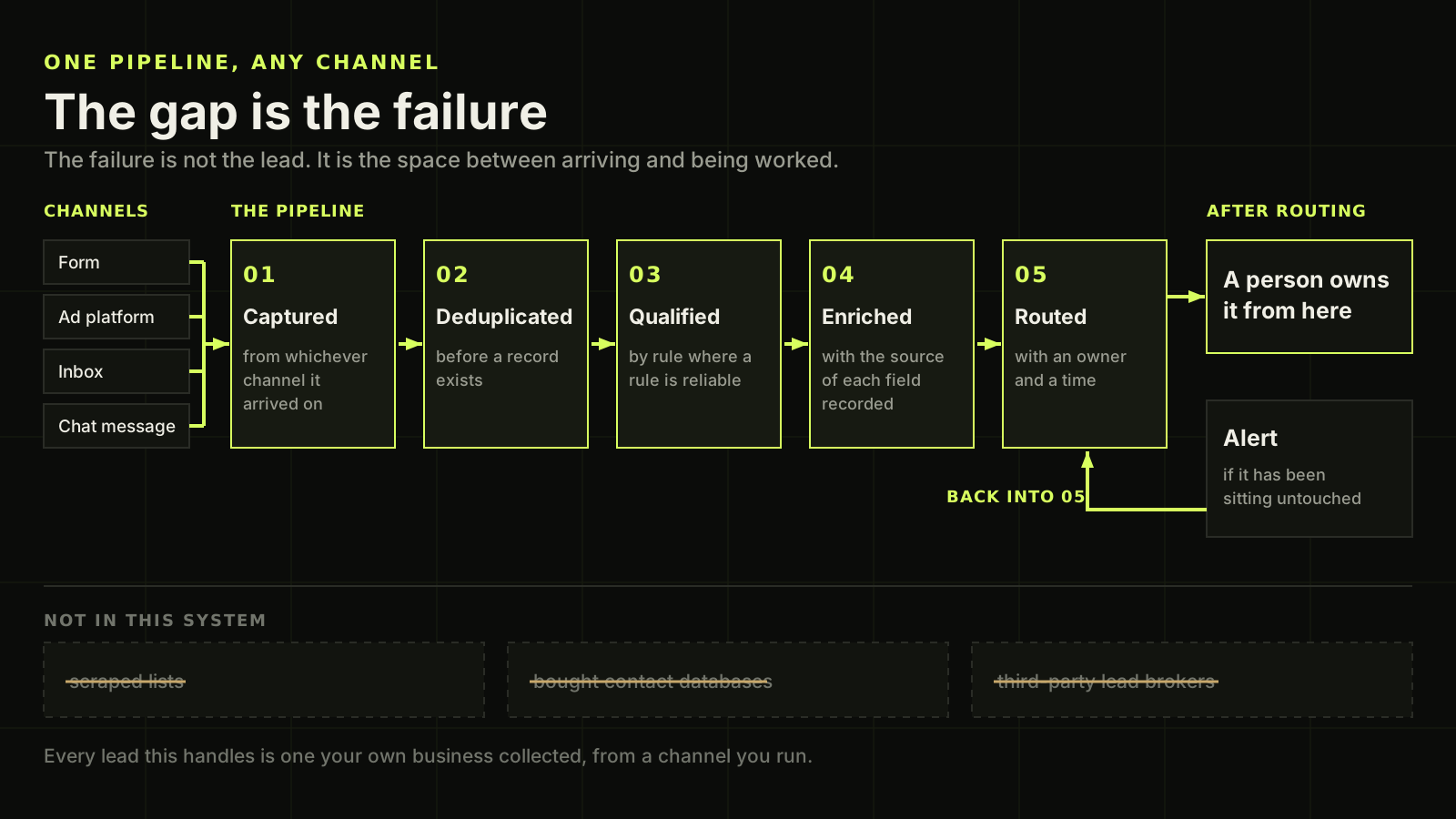
Open the diagram description
A left to right diagram of what happens to a lead between arriving and being worked. On the left, a column headed Channels lists four places a lead arrives: a form, an ad platform, the inbox, and a chat message. All four join one vertical line that feeds a single arrow into the pipeline. The middle of the diagram is the pipeline itself: five boxes in a row, each outlined in acid green and numbered, with an arrow pointing from each box to the next. Step one, Captured, from whichever channel it arrived on. Step two, Deduplicated, before a record exists. Step three, Qualified, by rule where a rule is reliable. Step four, Enriched, with the source of each field recorded. Step five, Routed, with an owner and a time. On the right, under the heading After routing, one box reads: a person owns it from here. Below that box a second, smaller box reads: Alert, if it has been sitting untouched. An arrow runs from the alert box leftwards and then upwards, back into step five, so a lead nobody has picked up returns to routing rather than going quiet. Along the bottom of the diagram, separated by a horizontal rule and drawn in dim grey with dashed outlines so that it reads as excluded, a band headed Not in this system holds three items, each struck through with a warm gold line: scraped lists, bought contact databases, and third party lead brokers. A closing sentence underneath reads: every lead this handles is one your own business collected, from a channel you run.
Drawn from this page’s own copy. No client, no contact and no record appears in it.
The boundary
Two things this never does.
It does not build you a list. No scraping, no bought contact databases, no third-party lead brokers, and nothing designed to avoid being noticed by a site it is reading. Every lead this handles is one your own business collected, from a channel you run.
It does not decide anything a person should decide. Qualification proposes an answer and the reasoning behind it. A person still owns the pipeline, and anything the system is not confident about goes to them rather than being guessed at, which is the same rule that applies to every model on this site.
Personal data
Enrichment touches personal data, and that is the design question.
What gets stored, why, on what basis and for how long belongs in the scope rather than in a conversation after it is live. In practice that means four things: enrich only from sources you already have a right to use, record which source each field came from so a wrong one can be traced and removed, keep the fields that have a use and drop the ones that were there because they were available, and make deletion something the system can actually perform rather than something somebody promises.
That is not caution for its own sake. The buyer who cares about this asks in the second meeting, and a pipeline that cannot answer is a pipeline that gets replaced.
The twenty minutes that cost you
How long does a lead sit before anybody sees it?
Tell me where leads arrive, what happens to each one today, and who is supposed to pick it up. I will tell you what I would automate first and what should stay with a person.
Tell Dan on WhatsApp (opens in a new tab)or email dan@burdetsky.xyz