Website · Case study
A multilingual site built as part of the practice.
MaliMake needed a site that works in four languages and leads a visitor to a clear next step. I designed and built it, and structured the content and the path through it.
Context
Four languages, one site to keep in step.
The brief was a site that speaks to people in four languages, without four separate sites to keep in step and without a visitor landing in the wrong one. It also needed a clear path from arriving to getting in touch, which is a content problem before it is a design one.
What I built
Each locale on its own path, declared once.
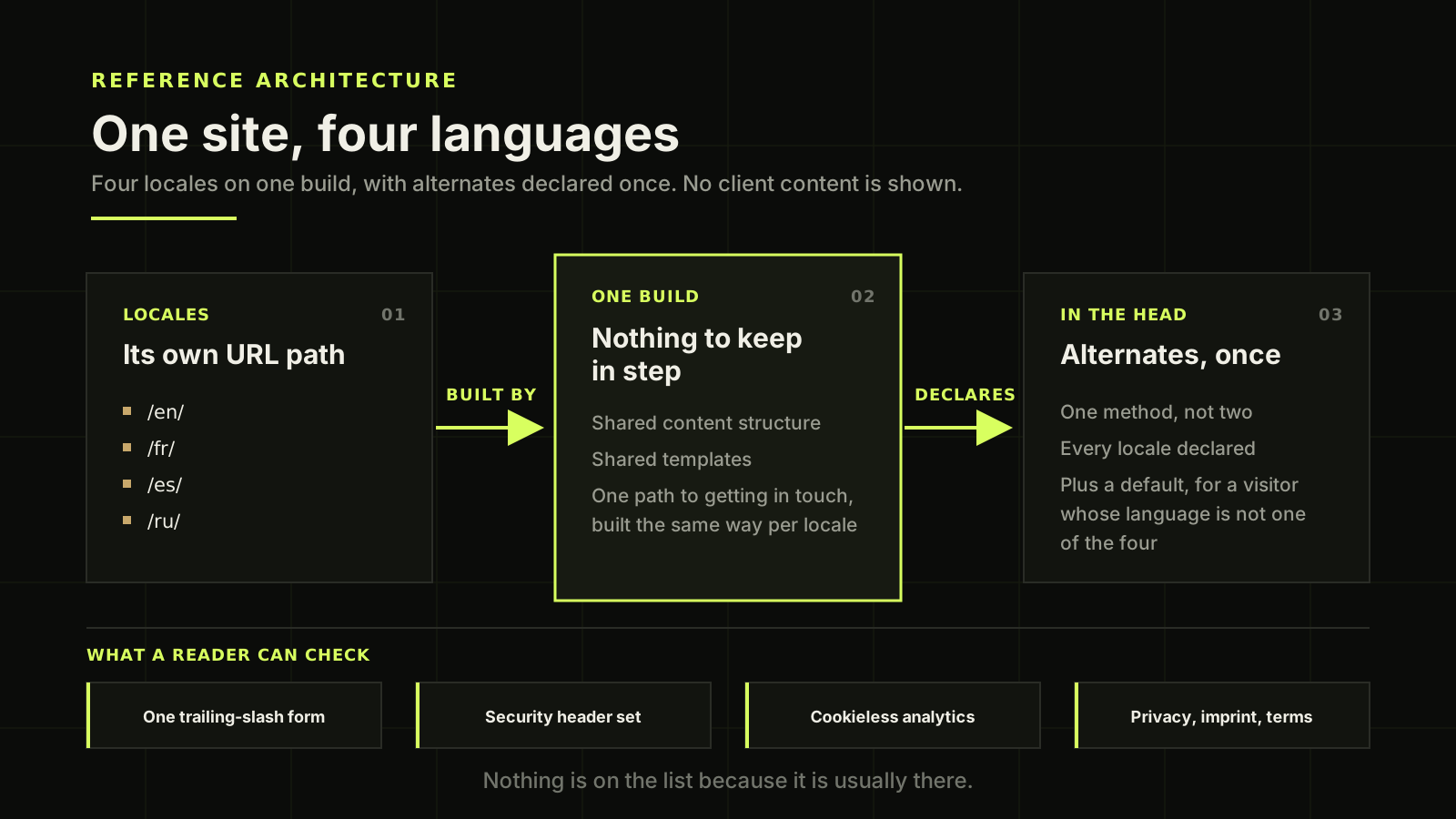
I designed the site, built it, and structured the content and the route a visitor takes through it. Four locales, each on its own URL path, with language alternates declared in the page head so a search engine and a visitor both land in the right one.
Declared once is the part that matters. There are two ways to tell a search engine which page is which language, and a site that uses both is a site whose two answers will eventually disagree.
I kept the path from arriving to getting in touch deliberately short, and built it the same way in each locale.
Open the architecture description
A three stage diagram, read from left to right, showing how one website serves four languages. Stage one, on the left, is headed Locales and lists four paths, each language on its own web address path: slash en, slash fr, slash es and slash ru. An arrow labelled Built by leads from that panel to stage two. Stage two, in the centre and drawn with a bright accent border to mark it as the core of the design, is headed One build. Its point is that there is nothing to keep in step, because one build holds the shared content structure, the shared templates, and one path from arriving on the site to getting in touch, built the same way for each language. A second arrow, labelled Declares, leads from the centre to stage three. Stage three, on the right, is headed In the head, and describes the language alternates that every page carries as link elements inside the head of the document: declared by one method rather than two, with every one of the four languages named, plus a default for a visitor whose own language is not one of the four. Below the three stages, under a heading reading What a reader can check, four properties sit in a row of four boxes: one trailing slash form normalised with redirects, a security header set, cookieless analytics, and a complete set of privacy, imprint and terms pages. A closing line at the foot of the diagram reads: nothing is on the list because it is usually there. No client content appears anywhere in this diagram.
Diagram drawn from this case’s own copy. No client content appears in it.
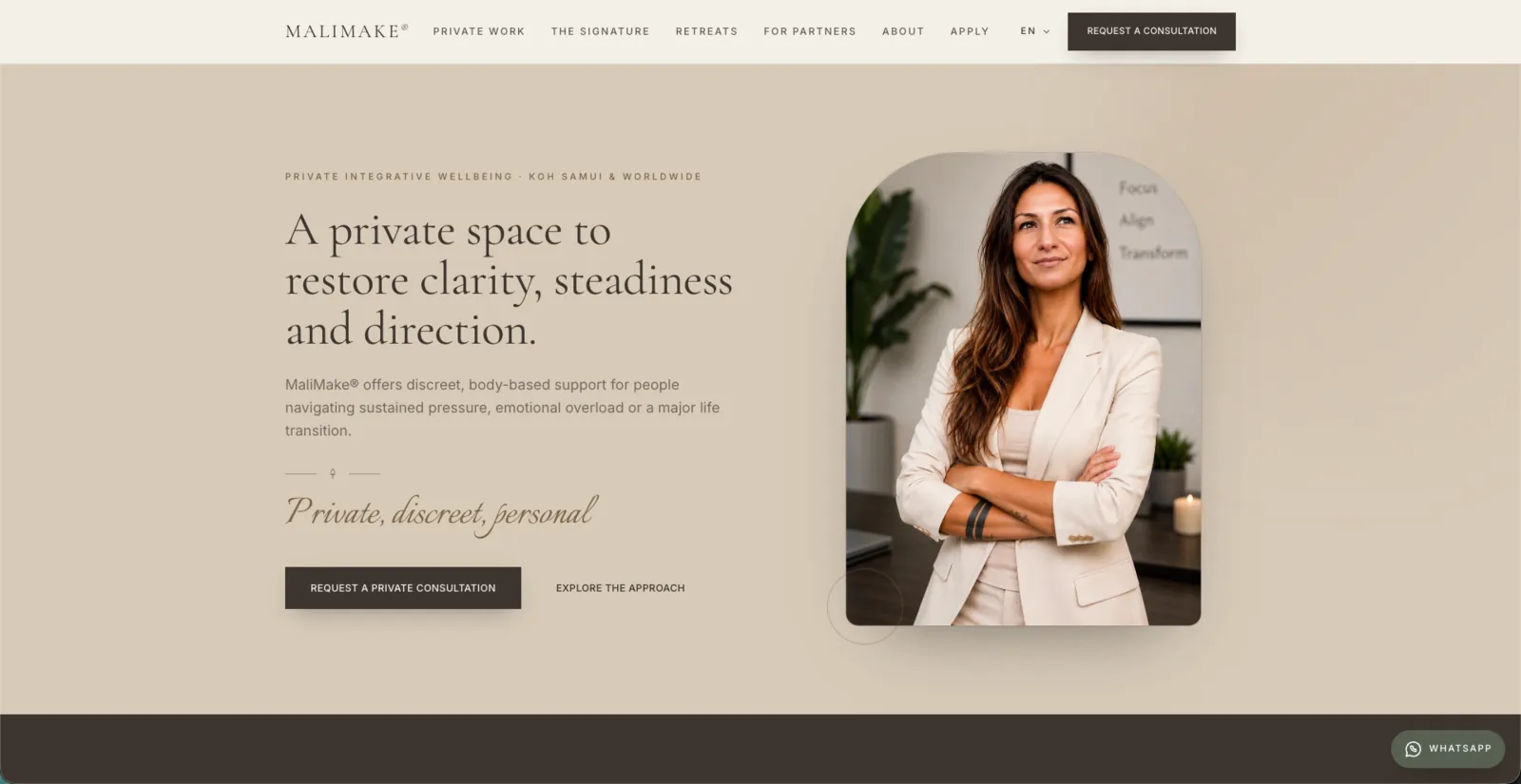
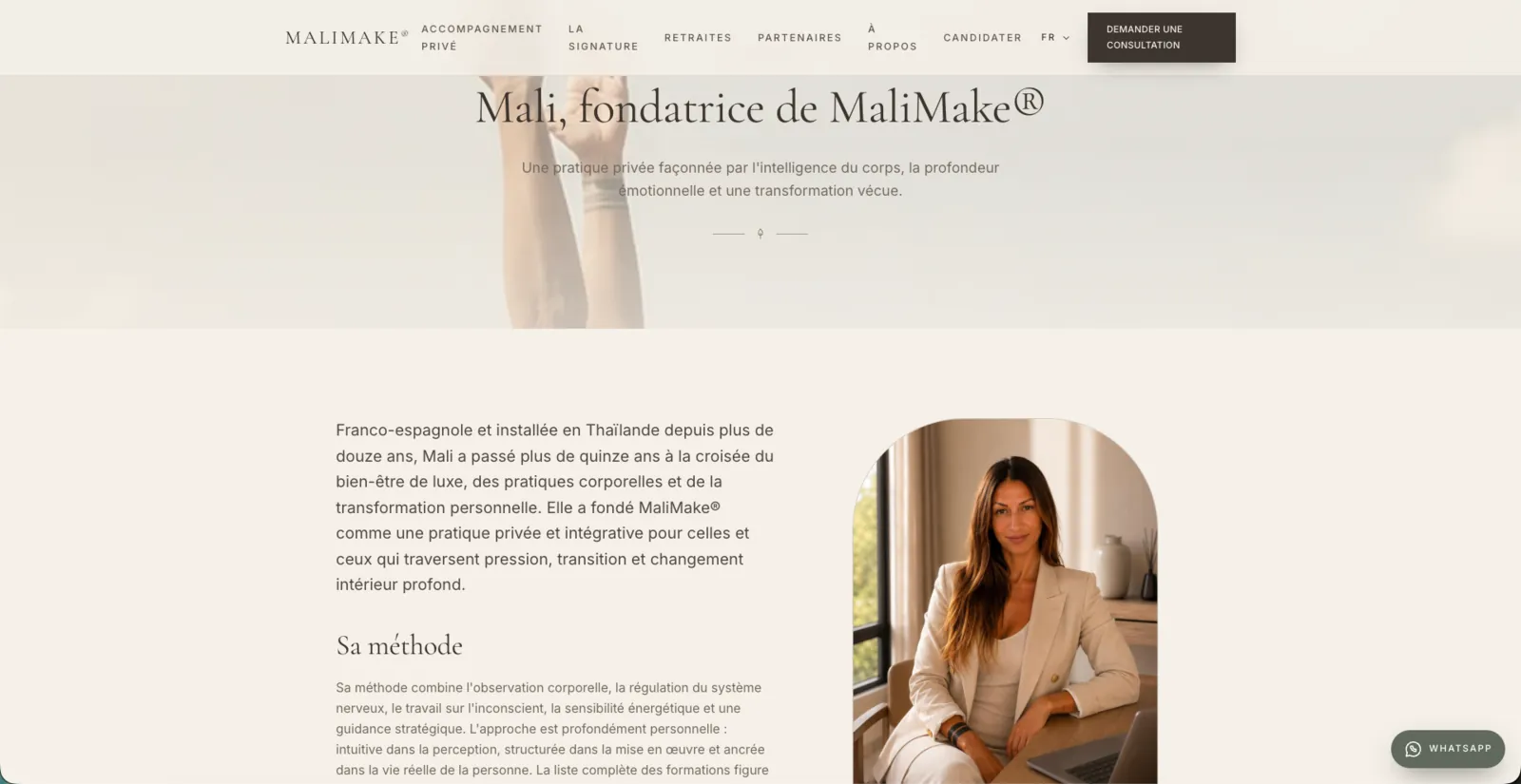
Two of the client’s own published pages, captured from the live site on 2026-08-17 and shown with their permission. Not the same page twice: one is the English home page and the other is a French content page, which is why the navigation differs as well as the language.
What a reader can check
Every line below was read from the live site.
None of this is a claim about how good the site is. It is a list of properties anyone can verify in a browser in a few minutes.
- 01 Four locales, each with its own URL path VERIFIED
- 02 Language alternates as head links, one method rather than two VERIFIED
- 03 One trailing-slash form, normalised with redirects VERIFIED
- 04 Referrer policy, content-type, frame and permissions headers VERIFIED
- 05 Cookieless analytics: no cookie, no local storage VERIFIED
- 06 A complete privacy, imprint and terms set VERIFIED
Check any of it at https://www.kinesiology.fit/ (opens in a new tab)
Result
“Technical claims a reader can check rather than take on trust.”
A site that works the same way in four languages, and whose technical claims a reader can check.
Lesson
A multilingual site is a routing problem wearing a content costume.
Most of what makes a four-language site work is decided before a word is translated: which URL a locale lives on, how a page declares its siblings, which trailing-slash form is canonical, and what happens to somebody who arrives on the wrong one. Get those wrong and the translations are fine and the site still sends people to the wrong page.
Related service: Digital Systems & Product Engineering
The site and the business behind it
Want a site that works as part of the business?
Tell me what the site has to do that it currently does not. I will tell you what I would change first.
Tell Dan about it on WhatsApp (opens in a new tab)or email dan@burdetsky.xyz